
The election is over and the fight goes on. On relationships that were already wounded and found in politics a respectable reason to fight.
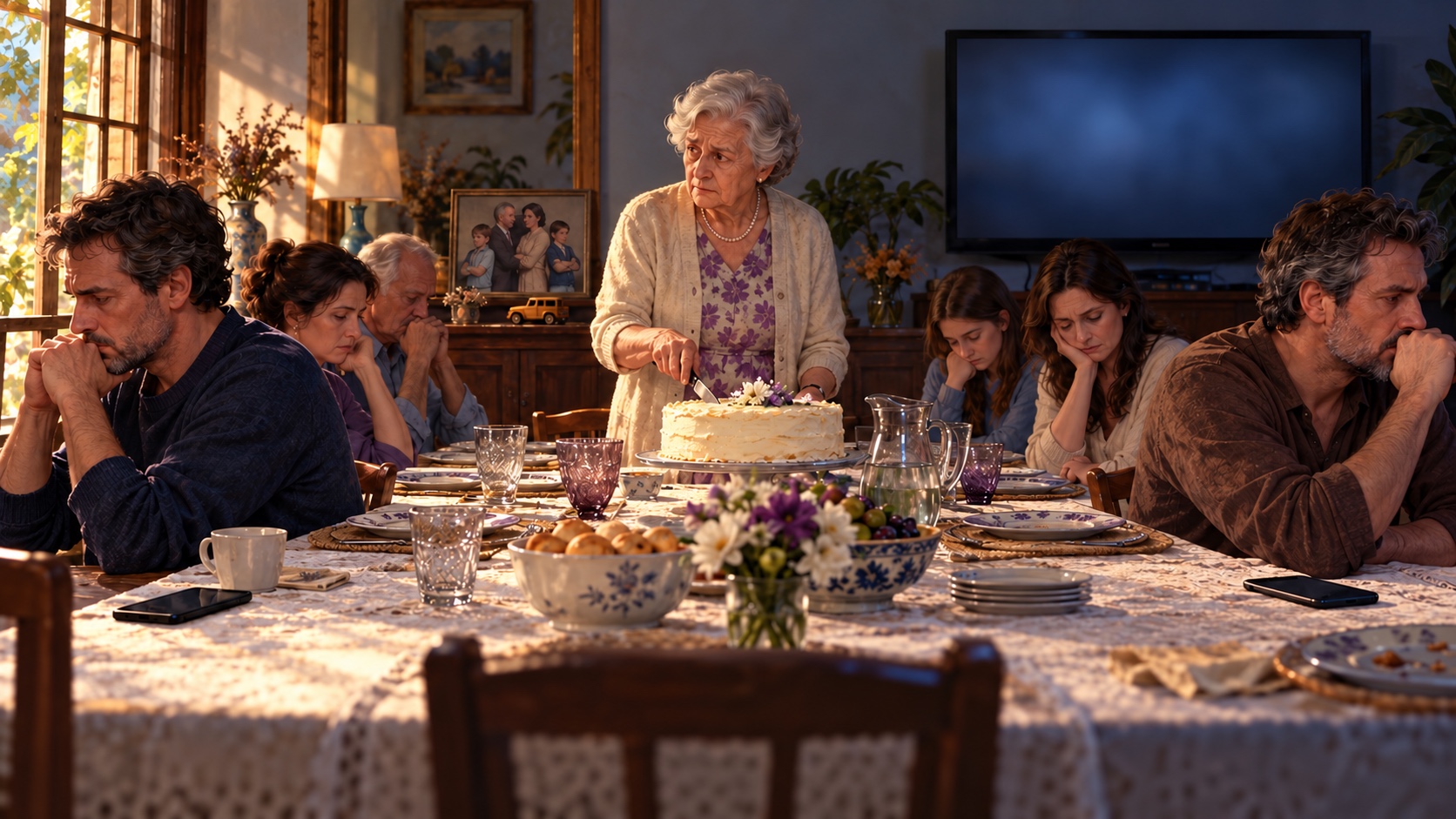
Their mother’s birthday fell two days after Brazil’s election. The two brothers arrived at different times, greeted everyone, and went to sit at opposite ends of the table. No one said a word about it. Their mother cut the cake glancing from one to the other, like someone who had seen that distance before, in other times, for other reasons.
The fight had happened weeks earlier, in an exchange of voice messages that started with a comment about the debate and kept escalating late into the night. One voted one way, the other the other way, and that had never been a secret. But somewhere around the fourth or fifth voice message, politics had already been left behind. One said his brother had always thought he was better than everyone else. The other replied that at least he hadn’t spent his life waiting for Dad to solve his problems.
Neither of those lines is about the election. Both are about thirty years old.
In my practice, this is one of the most common ways politics shows up after the polls close: not as a disagreement about ideas, but as the latest chapter in a story that began long before. The election is over. The fight, curiously, is not.
When the argument ends up far from the subject
There’s one sign that tends to give the pretext away: the fight starts on one topic and ends on another. It starts with a fact, a poll, something a candidate said, and within minutes it reaches the other person’s character. “You always,” “you never,” “that’s why nobody can stand you.” The past walks in uninvited. Episodes from twenty years ago reappear in precise detail, as if they had been kept in a drawer, waiting for the right occasion.
Another sign is disproportion. Serious political disagreements exist and can truly hurt, because they are about values. But when the intensity of the anger is far greater than the real distance between the opinions, or when two people who agree on almost everything fight as if they were enemies, it’s worth suspecting that the subject on the table isn’t the real subject.
Politics, on its own, already has the power to pull people apart. A study published in the journal Science in 2018 estimated that, over the 2016 Thanksgiving holiday in the United States, dinners between families from areas that had voted for opposing parties were 30 to 50 minutes shorter; other researchers put the effect lower. What no study of this kind can measure is what was already sitting at the table before dinner began.
The sediment every close relationship carries
Freud has a remark about this that tends to surprise people reading it for the first time. In Group Psychology and the Analysis of the Ego, from 1921, he writes that almost every intimate and lasting emotional relationship between two people, whether a marriage, a friendship, or the relationship between parents and children, leaves a sediment of feelings of aversion and hostility. This sediment is there even where there is love, and it usually goes unnoticed because it is pushed out of awareness (what psychoanalysis calls repression). When the hostility is directed at someone who is also loved, Freud speaks of ambivalence.
In the same passage, he recalls an image from Schopenhauer. On a winter day, porcupines huddle together to keep warm, feel one another’s quills, move apart, then draw close again because of the cold, until they find a distance at which they can stay without freezing and without getting hurt. Every family spends its life looking for that distance.
What Freud’s observation helps us understand is that hostility between people who are close is not an anomaly of certain families. It is part of intimacy. The difference lies in what each family manages to do with it: recognize it, talk about it, work it through little by little, or store it away until an occasion comes along when it can come out without looking like what it is.
Why an election makes such a good outfit
Few occasions offer old hostility attire as respectable as an election. In politics, anger can present itself as principle. Hurt becomes conviction. Resentment gains arguments, numbers, a cause. A person can say, in all sincerity, that it’s nothing personal, while saying the most personal thing they have ever said.
An election also offers sides, and sides easily reproduce a family’s alliances. Who was always closer to Dad, who was always on Mom’s side, who was the favorite, who felt left out. The sister who spent her childhood in her brother’s shadow finds in his vote proof that he never thought for himself; the brother finds in her vote proof that she always wanted to be different from the family. The candidates could be swapped, and the lines would be the same.
Something similar happens between parents and children. The son who never felt heard by his father finds, in an argument about the runoff, his first chance to stand up to him as an equal. The father who never quite accepted his son’s choices sees in his vote a summary of everything he disapproves of. In couples, political disagreement can become the sayable version of a disappointment that couldn’t be put into words: “we’re just too different” is easier to say than “I’ve felt alone in this marriage for years.”
What gets lost when the fight happens in the wrong place
The problem with a pretext is that it doesn’t resolve anything. The argument about politics can go on for years without anyone changing their mind and, even if someone did, the line about the brother who always thought he was better would still go unanswered. The real wound never enters the conversation. Only its clothes do.
And the displaced fight adds yet another layer. On top of the old conflict, which was never talked about, there is now fresh resentment over what was said during the campaign. When the election is over, the political topic cools down, but the distance remains. People are often puzzled: if the election is over, why are we still not speaking?
A word of caution in the other direction. Not every political disagreement is a symptom, and no one’s political position is an illness. Some fights really are about values, and some distances are imposed by real differences. Reducing everything to childhood would be another way of not listening. The question isn’t whether politics matters. It’s whether, in that particular fight, politics is what’s actually being talked about.
When it’s worth looking more closely
There are situations in which this question deserves a space of its own. When the political fight repeats, almost word for word, accusations that have come up at other times, for other reasons. When the anger doesn’t ease after the election and starts spreading to other relationships. When politics has become the only possible topic in a marriage, or the only way to fight. When you notice you’ve lost sleep, appetite, or peace over a family conflict you yourself don’t quite understand, or when the distress starts taking over the day.
This is where psychoanalytically oriented psychotherapy has something of its own to offer. It isn’t about teaching people to talk better, or brokering a reconciliation at any cost, or persuading anyone to give up what they think. It’s about having a place to recognize the old conflict beneath the new clothes: what was being said through politics, to whom, and for how long. Sometimes, after that, the conversation with that brother or that father becomes possible. Sometimes the person concludes that certain distances are necessary. Either way, they get to choose the distance instead of being carried along by it.
The election is over. If the fight goes on, chances are it was never about the election.
Related reading
- The whole house learns to walk on eggshells
- Separation: deciding clearly when nothing is clear
- The family group chat on WhatsApp: leave, mute, or stay
Did a political fight reopen an old wound?
Book your appointment here
In-person appointments in Brasília (Asa Sul) or by teleconsultation anywhere in Brazil.
Dr. Leonardo Sodré is a psychiatrist and psychotherapist in Brasília, Brazil (CRM-DF 14.206 · RQE 14.761). He holds a PhD in Psychiatry from UFRGS and teaches at the University of Brasília School of Medicine. This content is informational and educational, and does not replace individual clinical evaluation, diagnosis, or treatment.